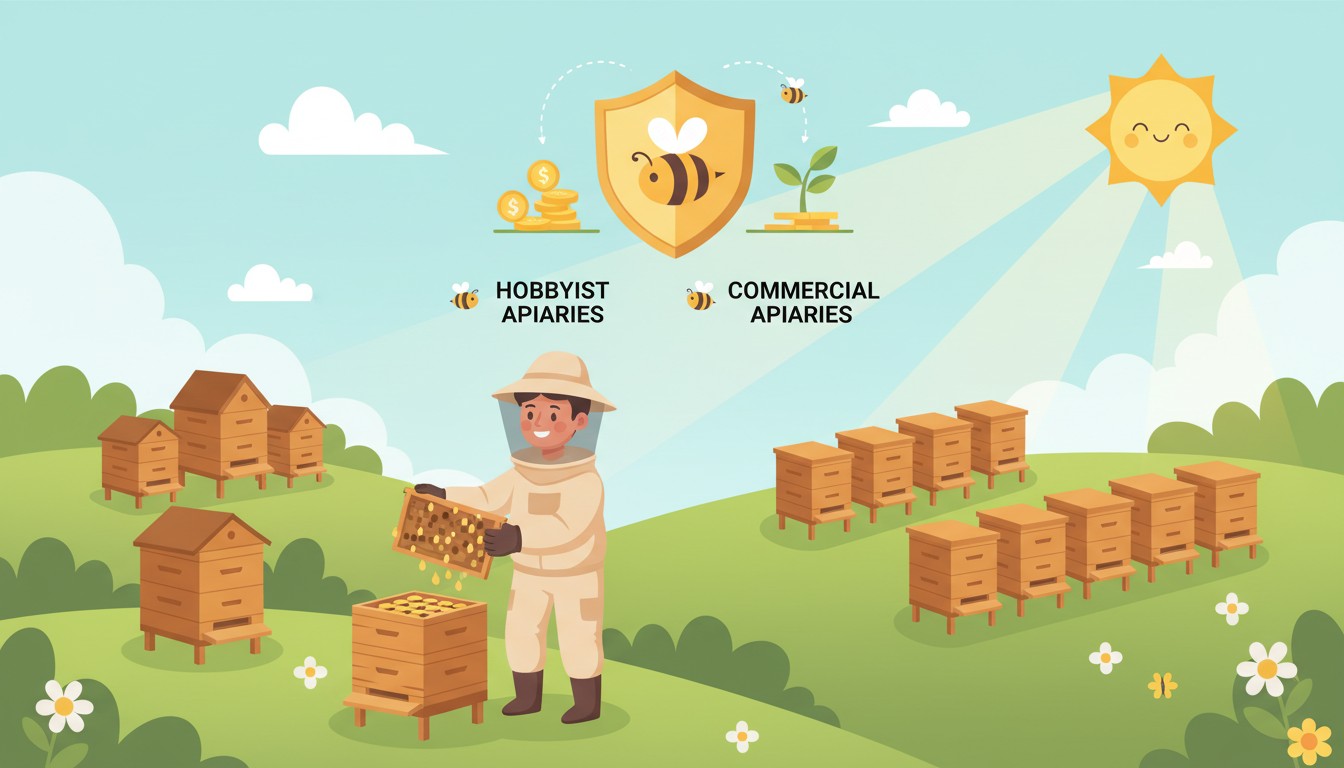
American beekeeping has surged to 3.8 million colonies, with hobbyists and commercial operators alike investing $20,000 to $200,000 in bees, equipment, and infrastructure. Yet research from the American Beekeeping Federation reveals that fewer than 30% of beekeepers carry specialized apiculture insurance, leaving the majority exposed to catastrophic financial loss from a single season of colony collapse, liability claim, or natural disaster. The shocking truth? 99% of beekeepers are insured with companies that do not offer coverage for bees—only the boxes they live in.
This coverage gap creates a brutal paradox: the more successful you become as a beekeeper, the more exposed you are. While we obsess over queen genetics and varroa treatment schedules, we treat insurance as an afterthought, assuming a standard farm policy will magically adapt to our insects. Understanding the specialized world of beekeeping insurance—and learning to navigate its Byzantine requirements—transforms your apiary from a financial time bomb into a truly secure investment.
The Invisible Gap: Why Standard Policies Fail Beekeepers
Every insurance decision rests on a foundation of risk models that treat your bees as either livestock, crops, or business inventory—categories that create coverage gaps wide enough to drive a bee truck through. Standard farm policies (Momentum Ag explains) “primarily focus on protecting you against the risk of insufficient rainfall,” but they don’t cover the bees themselves. This creates a critical blind spot: your hives are covered, your honey is covered, but the living creatures that produce everything are uninsured.
The exclusions are devastating. Homeowners policies exclude business activities, meaning the moment you sell a $10 jar of honey at a farmers market, your personal liability coverage evaporates. A customer gets stung, has an allergic reaction, and you’re facing a $100,000 lawsuit with zero coverage. As Jon Ianniello Insurance Agency notes, “Liability coverage provides protection against claims, such as someone getting a bee sting or having their property damaged by bees.” Without it, one incident can bankrupt your operation.
Even specialized farm policies often exclude the most catastrophic risk: overwinter colony loss. Saskatchewan’s program covers “adverse weather, disease and pest infestations,” but only for commercial beekeepers with minimum 100 colonies. Hobbyists with 5-50 hives—the fastest-growing segment—are left with zero protection for their biggest annual risk. The result is a silent crisis: beekeepers losing $15,000-$50,000 in livestock without a single dollar of compensation.
The Coverage Breakdown: What Policies Actually Protect
Homeowners Policy: May cover 1-2 hobby hives as personal property, but excludes business activities, liability at farm stands, and any commercial honey sales.
Farm/Ranch Policy: Covers hives (woodenware), equipment extractors, tools, and harvested honey—often excludes bees themselves.
Livestock Coverage: Some carriers treat bees as livestock, but most explicitly exclude insects from standard livestock mortality coverage.
The Gap: Bees—the most valuable and vulnerable component—are often uninsured, creating a coverage Bermuda Triangle.
The Coverage Triangle: Three Paths to True Protection
Beekeeping insurance operates through three distinct channels, each serving different operation sizes and risk profiles. Understanding this triangle helps you choose the right path rather than defaulting to inadequate coverage.
Path 1: Hobbyist Beekeeper Endorsement
For backyard beekeepers with 1-10 hives, some insurers offer a rider to your homeowners policy. This typically costs $75-$150 annually and provides $2,000-$5,000 in property coverage and $100,000-$300,000 in liability. However, the American Beekeeping Federation warns, “Do not count on your homeowner policy to provide this coverage.” Most exclude business activities, so the moment you sell honey, your protection vanishes.
Path 2: Commercial Apiculture Package
Commercial operations need comprehensive packages including General Liability, Property, Inland Marine (for mobile equipment), Commercial Auto, Workers Comp, and Umbrella coverage. Turlock Insurance offers “Beekeeper’s Inland Marine Coverage” for equipment, “Theft, Fire, Flood, Vandalism for Colonies,” and “Beekeeper’s Commercial Auto.” These policies start around $1,200 annually for small commercial operations and scale to $10,000+ for large migratory beekeepers.
Path 3: Apiculture Crop Insurance (API)
The USDA’s Apiculture Rainfall Index Insurance (API) is a federally subsidized program that insures against lack of rainfall affecting honey production and colony health. ProAg explains you can insure 70-90% coverage levels with subsidies of 51-59%. The beauty of API is that it’s index-based—no reporting of actual yields required. If rainfall in your grid falls below your selected threshold, you receive an indemnity automatically. This program is available in 37 states and covers operations of all sizes.
The Liability Landmine: When Your Bees Become Your Legal Problem
Liability coverage represents the most underestimated risk in beekeeping. A single bee sting can trigger a lawsuit that costs $50,000-$500,000 in legal defense and settlement. As Jon Ianniello Insurance Agency explains, “Premise liability would be someone falling in your booth and getting injured. This coverage could even apply if someone gets close to your hives and gets stung.” The American Beekeeping Federation adds that product liability is essential: “someone having a reaction to a balm you sold or someone getting sick after consuming your honey.”
General Liability policies start around $450 annually for hobbyists and scale to $2,000-$5,000 for commercial operations. BeeInsure offers policies with “$1,000,000 per claim, with a $2,000,000 aggregate limit” and a $250 deductible. This covers both premise liability (stings, trips at your apiary) and product liability (honey, wax, propolis products). Most importantly, it provides legal defense representation—a critical benefit when frivolous lawsuits arise.
The Overwinter Mortality Crisis
Overwinter colony loss represents beekeepers’ single greatest financial risk, with commercial operations losing 30-45% of colonies annually. Saskatchewan’s program covers “adverse weather, disease and pest infestations” with deductibles based on your individual loss experience (22.7% provincial average). New beekeepers start at the provincial average; experienced operators with lower losses get better rates. This incentivizes good management while protecting against catastrophic losses.
The program requires fall inspections by insurance adjusters to verify “winter readiness”—only hives meeting industry standards are insurable. This quality control benefits both parties: insurers reduce moral hazard, and beekeepers receive expert assessment. Claims must be filed by May 15, before spring cleanup, ensuring accurate loss documentation. While currently limited to Saskatchewan and Manitoba, similar programs are expanding as governments recognize bees’ agricultural importance.
The Overwinter Coverage Calculation
Coverage Formula: Number of insurable colonies × Survival rate (%) × Selected coverage level (%) = Insured colonies
Example: 1,000 colonies × 77.3% historic survival × 90% coverage = 696 insured colonies
Claim Trigger: If fewer than 696 colonies survive, you receive indemnity for the shortfall at $300/colony.
Deductible: First 227 colonies lost are on you (22.7% deductible). Remaining losses are covered.
Premium: $7.50/hive with 60% government subsidy = $3/hive actual cost.
Real-World Impact: When Insurance Decisions Make or Break Apiaries
The abstract becomes concrete through examples of beekeepers who faced identical crises but ended with opposite financial outcomes based on their insurance choices.
The Farmers Market Sting
A hobbyist beekeeper selling honey at a local market had a customer experience anaphylactic shock after sampling honey. The medical bills totaled $35,000, followed by a $200,000 lawsuit. Her homeowners policy denied coverage, citing “business activity exclusion.” She faced bankruptcy and lost her home. Another vendor, with a $450 annual BeeInsure liability policy, experienced an identical incident. His insurer paid the medical bills, provided legal defense, and settled the lawsuit for $75,000. His total out-of-pocket cost: $250 deductible. Same crisis, opposite destinies.
The Winter That Wiped Out Everything
A commercial beekeeper in Saskatchewan lost 350 of his 1,000 colonies to a polar vortex event—$105,000 in replacement cost. Without overwinter mortality insurance, he absorbed the entire loss, forcing him to sell his honey house to stay afloat. His neighbor, enrolled in the provincial program with a 22% deductible, received $37,800 in indemnity payments. The $7,500 premium cost him only $3,000 after subsidies. He restocked his colonies and maintained his operation.
The Hive Theft That Wasn’t Covered
A sideline beekeeper arrived at his outyard to find 20 hives stolen—$6,000 in equipment and bees. His farm policy covered the woodenware ($2,400) but excluded bee coverage entirely. The $3,600 in livestock value became a total loss. Another beekeeper, with a specialty apiculture policy that included “Beekeeper’s Theft, Fire, Flood, Vandalism for Colonies,” received full replacement value: $6,000 for equipment and $150/colony for the bees themselves. The policy cost him $180 extra annually.
Practical Strategies: Building Your Apiary Protection Plan
Securing proper beekeeping insurance isn’t complicated—it just requires systematic action before disaster strikes. Here’s how to build a bulletproof protection plan.
Audit Your Operation and Income Streams
Before calling an agent, document everything: number of colonies, equipment inventory with values, annual honey production, pollination contracts, farmers market income, and any product sales (balms, wax, propolis). This audit reveals whether you’re a hobbyist (no regular income), sideline (under $10,000 annual revenue), or commercial operation. Each category requires different coverage. The American Beekeeping Federation emphasizes that “commercial operations will want to consider general liability, business personal property and/or inland marine, commercial vehicle coverage, peak season inventory coverage, workers compensation if there are employees and umbrella liability.”
Choose Your Insurance Path Strategically
Don’t default to your current insurance agent. Seek brokers who specialize in apiculture. BeeInsure offers instant online quotes. Apiculture Rainfall Index Insurance is available through USDA-approved agents. Get quotes for three scenarios: extending homeowners, a farm policy, and a commercial package. Compare not just price but coverage for bees (not just boxes), colony mortality, and business activities.
Master the Documentation Game
For API insurance, you must register colonies by location (grid system) and file declarations by November 30. For commercial policies, maintain hive inspection records, feeding logs, and treatment schedules. This proves good management, reducing your deductible over time. Photograph equipment serial numbers and brand colonies with registered markings to prove ownership if theft occurs. Store these records in cloud storage—if your office burns, digital records survive.
Layer Physical and Procedural Protection
Insurance covers loss, but preventing loss is cheaper. Install hive alarms and GPS trackers on outyards to deter theft. Follow best management practices for overwintering to reduce mortality below your deductible threshold. Secure liability waivers at farmers markets and post warning signs at your apiary. These measures reduce claims and demonstrate risk management to insurers, potentially lowering premiums.
Your Apiary Is Only as Secure as Its Insurance
Beekeeping promises connection to nature, agricultural contribution, and potential income—but these rewards come with risks that can erase years of investment in a single season. Insurance isn’t a betrayal of the organic, hands-on ethos of beekeeping; it’s the pragmatic shield that ensures a colony collapse, liability claim, or theft doesn’t destroy your operation.
Your power to protect your apiary doesn’t depend on choosing the perfect queen or the most effective varroa treatment. It depends on one thing: facing the insurance question before disaster strikes. The seasons will turn whether you’re insured or not. The bears will raid whether you’re prepared or not. You can be the beekeeper who loses everything, or the beekeeper who survives a catastrophe and rebuilds.
The choice is yours. Start now. Make the call. Document your colonies. Purchase the policy. Your journey from vulnerable beekeeper to protected apiarist begins with a single conversation with an insurer who understands that bees aren’t just livestock—they’re agricultural assets, pollinators, and your passion worth protecting.
Key Takeaways
99% of beekeepers are insured with carriers that don’t cover bees themselves—only woodenware and equipment—creating a catastrophic coverage gap for colony loss.
Homeowners policies exclude business activities, leaving beekeepers who sell honey completely exposed to liability from stings, product reactions, and premises accidents.
Apiculture Rainfall Index Insurance (API) provides federally subsidized drought protection based on precipitation data, requiring no yield reporting and covering operations of all sizes.
Overwinter bee mortality insurance programs in Canada offer models for colony loss protection, using individual deductibles based on historic survival rates and rigorous fall inspections.
Effective beekeeping insurance requires operation audits, specialized apiculture brokers, meticulous colony documentation, and proactive risk management to reduce deductibles and prevent losses.