The commercial drone photography industry has skyrocketed into a $6.2 billion market, with aerial service providers capturing everything from cinematic weddings to critical infrastructure inspections. Yet industry surveys expose a critical vulnerability: over 65% of drone photographers operate with inadequate or nonexistent insurance coverage, creating a dangerous gap between professional ambition and financial protection. The average liability claim from a drone crash costs $35,000 in property damage and legal fees, while data loss and privacy violation lawsuits regularly exceed $50,000—expenses that instantly destroy uninsured operators.
Unlike traditional photographers protected by studio infrastructure and controlled environments, drone photographers operate as mobile, high-tech risk managers navigating FAA regulations, unpredictable weather, and public airspace. You’re managing $15,000 in flight equipment, capturing footage worth millions to clients, and navigating liability in uncontrolled environments. Each flight represents a unique risk profile, making generic business insurance dangerously insufficient. Understanding the specialized coverage architecture for aerial photography transforms you from a vulnerable hobbyist into a protected professional prepared for the inevitable.
The Invisible Architecture: Policies That Build Your Financial Firewall
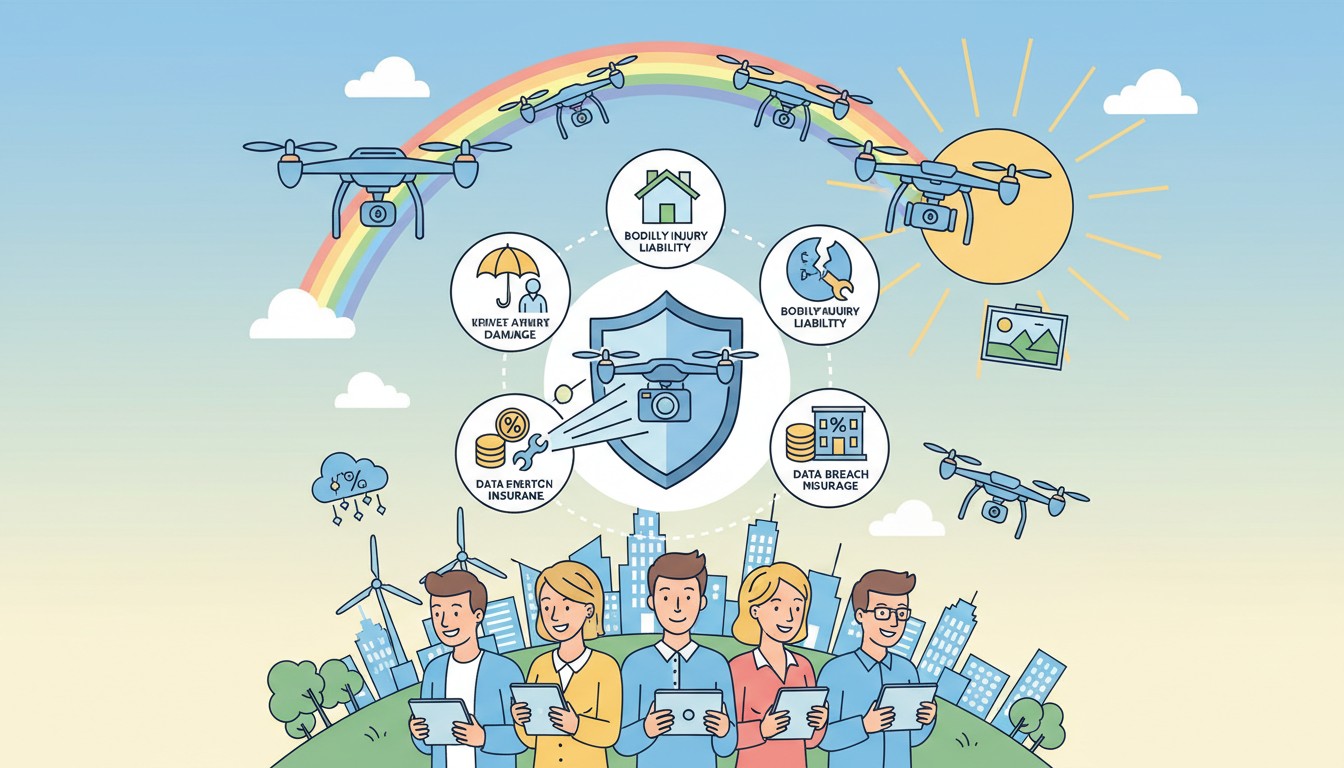
Drone photography insurance isn’t a single policy—it’s a strategic stack of coverages addressing the unique risks of operating uncrewed aircraft in public airspace, capturing valuable data, and managing high-tech equipment. Each layer protects against specific vulnerabilities that could otherwise destroy your business.
Liability Insurance forms the absolute foundation, protecting against third-party bodily injury and property damage. When your drone crashes into a luxury car during a wedding shoot or strikes a bystander at a public event, this coverage handles medical bills and legal defense. Standard policies provide $1 million in coverage for $500-1,000 annually, though many commercial clients now require $2-5 million limits. Critical warning: Most general business policies explicitly exclude aircraft, meaning you need specialized drone liability coverage—not a generic business endorsement.
Hull Insurance covers physical damage to the drone itself—crashes, flyaways, theft, and water damage. For a $10,000 DJI Inspire or similar pro-level aircraft, hull coverage costs 8-12% of the drone’s value annually ($800-1,200). SkyWatch.AI extends coverage to include theft, flyaway, and disappearance scenarios that standard policies often exclude. A photographer in Colorado recovered $12,000 when his drone auto-landed in a river during a mapping project—without hull coverage, that loss would have required months of profit to replace.
Payload Insurance protects your high-value cameras, gimbals, and sensors. A $7,000 Zenmuse camera or thermal imaging payload requires separate scheduling on your policy—it’s not automatically covered under hull insurance. Payload coverage typically adds $400-800 annually per item but ensures you can immediately replace critical gear that defines your service offerings.
Personal & Advertising Injury Coverage has become essential for aerial photographers. This protects against privacy violation claims, libel, and defamation when your footage inadvertently captures individuals or private property. One photographer faced a $45,000 lawsuit after a neighbor claimed his real estate photos violated their privacy by showing their backyard pool—his advertising injury coverage paid the legal defense and settlement, preserving his business.
The Coverage Stack: Your Protection Pyramid
Foundation Layer: Liability Insurance ($500-1,000/year) – Bodily injury, third-party property damage, legal defense
Asset Layer: Hull Insurance (8-12% of drone value annually) – Aircraft replacement, crash damage, flyaway protection
Equipment Layer: Payload Insurance ($400-800/year per item) – Cameras, sensors, gimbals, thermal imaging equipment
Operational Layer: Ground Equipment Coverage ($15-30/month) – Controllers, tablets, monitoring stations
Privacy Layer: Personal & Advertising Injury ($25-50/month) – Privacy violations, libel, unauthorized image use
Expansion Layer: Cyber Liability, Umbrella ($20-75/month) – Data breaches, increased limits for commercial clients
The Remote ID Compliance Trap
Since 2024, FAA Remote ID enforcement has become a critical insurance factor. If your drone lacks a compliant Remote ID module and you file a claim, insurers can legally deny coverage—even with an active policy. This technical requirement creates a dangerous coverage gap for photographers using older or custom-built aircraft. Before your next shoot, verify Remote ID compliance and document it with your insurer to prevent claim denial when you need protection most.
The Psychology of Underinsurance: Why Aerial Entrepreneurs Gamble
If insurance is so critical, why do most drone photographers operate exposed? The answer lies in deadly cognitive biases that make catastrophic risk feel remote while premium costs feel immediate and burdensome.
The “Skilled Pilot Immunity” Bias
Drone photographers invest hundreds of hours mastering flight controls, weather reading, and shot composition. This expertise creates a dangerous belief that crashes only happen to reckless beginners. Yet industry data reveals that 70% of claims involve experienced pilots facing unexpected equipment failures, sudden weather changes, or third-party interference. Your skill reduces risk but eliminates nothing—GPS glitches, bird strikes, and battery failures don’t discriminate based on flight hours.
The “Premium vs. New Drone” Miscalculation
A $1,200 annual hull insurance premium feels like money that could buy a new Mavic 3 or fund a marketing campaign. This present bias ignores catastrophic asymmetry: you’re betting your entire $25,000 equipment investment and business continuity against a manageable expense. On-demand coverage from providers like SkyWatch.AI starts at just $5-15 per hour, making protection accessible for even occasional operators. The cost of one uninsured crash exceeds a decade of premiums.
The Complexity Shutdown
Aviation insurance terminology feels designed to confuse creative professionals who speak the language of composition, not coverage. Combined Single Limits, per-project aggregates, agreed value vs. actual cash value, hull vs. payload—the jargon creates analysis paralysis. A photographer who can explain the rule of thirds and dynamic range feels overwhelmed by policy nuances and simply… avoids the decision. This complexity aversion leaves them exposed to risks they can’t articulate but will instantly recognize when a rotor blade shatters a windshield.
Real-World Impact: When Insurance Saved Everything
The abstract becomes concrete through documented cases. These scenarios demonstrate how proper coverage transformed potential catastrophes into manageable business events.
The Wedding Crash That Didn’t End a Career
A drone photographer was capturing aerial shots of a luxury outdoor wedding when unexpected wind shear drove his aircraft into the groom’s 2024 Tesla Cybertruck, shattering the windshield and denting the hood. Damage totaled $22,000. His liability policy immediately covered repairs, and the “additional insured” endorsement extended coverage to the wedding venue, protecting them from any third-party claims. The photographer paid only his $1,000 deductible and maintained the client relationship. Without coverage, he would have faced wage garnishment and business closure. Instead, he landed three referrals from guests impressed by his professional handling of the crisis.
The Data Loss That Killed a Deal
During a commercial real estate shoot for a $5 million property listing, a photographer’s memory card corrupted, losing all aerial footage of the acreage and surrounding landscape. The client missed their marketing deadline and lost a potential buyer, then sued for $75,000 in alleged lost profit. The photographer’s professional liability insurance covered the legal defense and settled the claim for $18,000. His cyber liability rider also paid $3,500 for data recovery services that successfully retrieved 80% of the footage. Without coverage, the $21,500 total cost would have bankrupted his operation.
The Privacy Violation That Went Viral
While photographing a waterfront mansion, a drone pilot captured incidental footage of a neighbor’s dock where sunbathers were visible. The neighbor sued for invasion of privacy and emotional distress, demanding $60,000. The case gained local media attention, threatening the photographer’s reputation. His personal and advertising injury coverage paid for a public relations consultant and legal team, resolving the claim for $12,000 and issuing a public apology. The policy’s crisis management component saved his business from reputational destruction that would have persisted long after paying the settlement out-of-pocket.
The 2025 Insurance Landscape: Remote ID, Rising Premiums, and Digital Liability
The drone insurance market is undergoing seismic shifts in 2025, driven by FAA enforcement, evolving privacy laws, and the industry’s maturation from hobby to high-stakes commercial service. Understanding these changes helps you secure affordable coverage before market forces restrict access.
The Remote ID Enforcement Wave
Since 2024, the FAA has aggressively enforced Remote ID requirements, and insurers have followed suit. As DroneU reports, insurance providers can now legally deny claims if your aircraft lacks compliant Remote ID broadcasting, even if the incident is unrelated to identification. This technicality has caused a spike in denied claims among photographers using older drones or custom builds. Before your next paid flight, verify compliance and document it with your carrier—otherwise, you’re paying premiums for worthless coverage.
The Privacy Law Explosion
State-level privacy laws are proliferating, with California, Florida, and Texas enacting strict regulations on aerial surveillance and image capture. Privacy violation claims have increased 40% since 2023, making personal injury coverage essential rather than optional. Photographers operating without this endorsement face uncovered legal exposure that can reach six figures. The cost of adding privacy coverage (typically $25-50 monthly) is negligible compared to defending a single claim.
The On-Demand vs. Annual Premium Shift
The market has split into two distinct segments. On-demand providers like SkyWatch.AI and AirModo offer hourly rates ($5-15/hour) and monthly plans (from $62/month) that appeal to part-time operators. However, frequent flyers find annual policies more economical, with full coverage (liability + hull + payload) averaging $1,500-2,500 annually for professional-grade equipment. The key is honest flight frequency assessment—paying hourly for daily operations can cost 3x more than an annual policy.
2025 Budget Reality Check: Drone Photography Insurance Costs
Part-Time Photographer (5-10 shoots/month): $62-150/month (on-demand or monthly plans)
Full-Time Solo Operator: $1,500-2,500/year (annual liability + hull + payload)
Small Team (2 pilots, 3 drones): $3,500-5,000/year (fleet coverage, increased limits)
Factors Driving Costs: Drone value, flight frequency, operating area (urban vs. rural), claims history, coverage limits, services offered (weddings vs. industrial inspections)
Practical Strategies: Building Your Aerial Insurance Infrastructure
Moving from uninsured to fully protected requires a systematic approach. Here’s how aerial photographers can construct comprehensive coverage efficiently.
1. Start With Non-Negotiable Liability
Begin with drone-specific liability insurance covering at least $1 million per occurrence. Never rely on generic business liability—it contains aircraft exclusions that deny drone-related claims. Specialized drone carriers understand aviation risks and provide coverage that actually responds when your drone causes damage. This foundation costs $500-1,000 annually and protects against the most financially devastating scenarios.
2. Document Remote ID Compliance Immediately
Before your next paid flight, verify your drone’s Remote ID compliance. Document this with your insurer in writing. If you’re using a module, keep the installation receipt and certification. If your drone is exempt, obtain FAA confirmation. This single step prevents claim denial under the 2024-2025 enforcement wave. One photographer’s $18,000 claim was denied because his aftermarket Remote ID module wasn’t properly registered—losses that proper documentation would have prevented.
3. Insure Equipment to Its True Replacement Value
When purchasing hull and payload coverage, opt for agreed value policies rather than actual cash value. Agreed value locks in your payout amount upfront, while cash value depreciates your equipment, leaving you underinsured when replacement time comes. A photographer saved $4,200 by having agreed value coverage when his two-year-old drone was destroyed—cash value would have paid only 60% of replacement cost due to depreciation.
4. Work With Aviation Insurance Specialists
Standard commercial brokers rarely understand drone operations. Seek insurance professionals specializing in UAV coverage who can compare policies from providers like BWI, Avalon Risk, or SkyWatch.AI. Specialists know which carriers offer free additional insureds for clients, how to structure fleet policies for multiple drones, and which endorsements are essential for your specific services (real estate, weddings, inspections).
5. Build Coverage as Your Services Expand
Start with liability and hull coverage for your primary drone. Add payload insurance when you invest in specialized cameras. Include personal injury coverage when you begin shooting events with crowds. Add cyber liability if you handle client data or cloud processing. Each addition should correlate with a specific business expansion that introduces new risk, ensuring you never pay for coverage you don’t need while remaining protected as you grow.
6. Master the Documentation Discipline
Insurance claims succeed or fail based on flight logs, pre-flight checklists, and client communications. Use apps like DroneDeploy or SkyWatch to automatically log flight data. Maintain written records of weather conditions, client permissions, and airspace authorizations. Photograph your equipment before each shoot. This documentation accelerates claims processing and prevents fraudulent client allegations. One photographer avoided a $25,000 false “drone damage” claim by producing GPS logs proving his aircraft was never within 100 feet of the alleged incident location.
The Hidden Cost of Flying Bare: What You’re Really Risking
Operating without drone insurance isn’t just risky—it’s fundamentally more expensive than being covered when you calculate true business costs. The expense reveals itself in ways most photographers never consider until catastrophe strikes.
Lost Premium Market Access
Corporate clients, luxury wedding planners, and commercial real estate firms require certificates of insurance before hiring. A photographer in Miami lost a $35,000 contract to shoot a luxury resort development because he couldn’t produce $2 million in liability coverage. The client explicitly stated: “Our risk management policy prohibits hiring uninsured aerial operators.” The cost of that single lost contract exceeded seven years of insurance premiums. Proper coverage isn’t an expense—it’s a premium market access pass.
Personal Asset Exposure
Operating as a sole proprietor without insurance creates unlimited personal liability. A judgment against your drone business becomes a judgment against your home, personal vehicles, and savings. Forming an LLC without insurance provides minimal protection because courts can “pierce the corporate veil” when businesses operate recklessly—defined as knowingly flying uninsured. One photographer faced personal bankruptcy after a $52,000 judgment for a flyaway drone that crashed through a residential skylight. His LLC offered no shield due to lack of insurance.
The Psychological Performance Tax
Flying uninsured imposes a constant cognitive load. Photographers report heightened anxiety during complex shots, reluctance to take on challenging but lucrative assignments, and conservative framing that reduces the creative impact clients pay for. This psychological tax limits revenue and stifles artistic growth. Conversely, insured operators describe a “confidence dividend”—the freedom to execute bold shots knowing that equipment loss becomes a business inconvenience rather than a career-ending catastrophe.
Your Protection Is Hiding in Plain Sight
The insurance separating successful drone photography businesses from grounded ventures isn’t a luxury or bureaucratic hurdle—it’s a fundamental business system that transforms unpredictable aerial risks into manageable expenses. The invisible architecture of coverage allows you to focus entirely on creative execution and client relationships without the constant shadow of potential catastrophe.
Every flight you log without proper insurance is a bet with odds that will eventually turn against you. The operators who thrive for decades aren’t necessarily the most skilled pilots—they’re the business owners who treated insurance as essential infrastructure from their first paid gig.
Your competitor with lower rates might be flying bare, but they’re one incident away from permanent grounding. Your decision to invest in protection isn’t just risk management—it’s strategic positioning. In an industry where 70% of claims involve factors outside your control, insurance becomes a competitive moat separating sustainable businesses from temporary operators.
Key Takeaways
Drone photography requires specialized insurance stacking liability, hull, payload, and privacy coverage to address the unique risks of operating uncrewed aircraft in public airspace and capturing sensitive visual data.
Cognitive biases like optimism bias and complexity aversion cause most operators to underinsure, despite 70% of claims involving equipment failures and third-party factors outside pilot control.
Proper coverage creates a multiplier effect beyond claim payment, enabling access to corporate clients, competitive differentiation, and psychological freedom to execute creative, high-value shots.
The 2025 landscape requires Remote ID compliance verification for valid coverage, while rising privacy litigation makes personal injury endorsements essential for commercial operations.
Building coverage incrementally as equipment and services expand, documenting every flight meticulously, and working with aviation insurance specialists transforms insurance from expense to strategic infrastructure that enables confident growth.